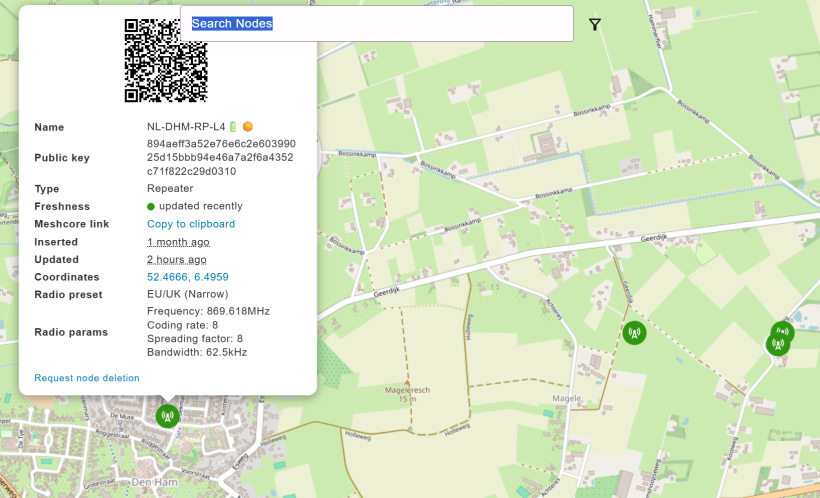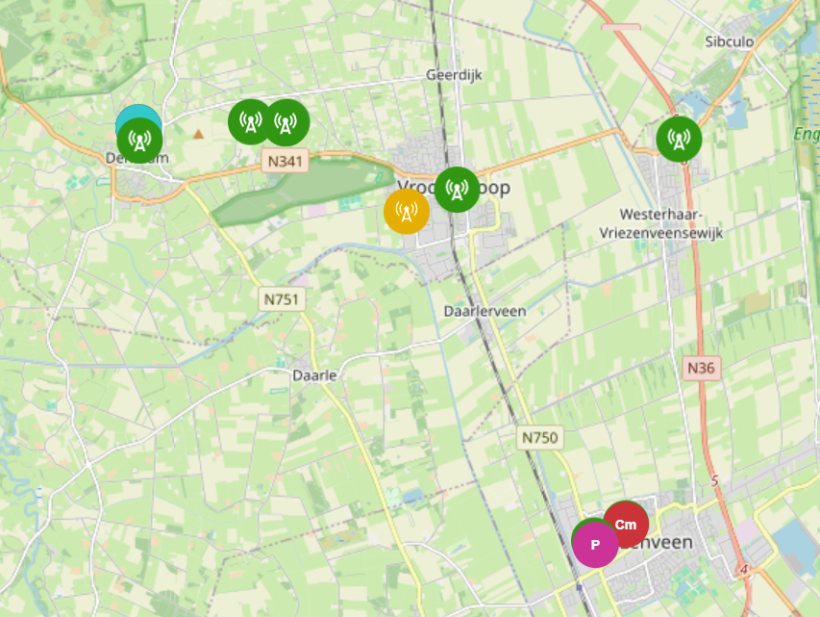
Solar-Powered Repeater
Intro
Repeaters are used to extend the range of a MeshCore network. A repeater's job is to forward MeshCore packets to the destination device. It does not forward or retransmit every packet it receives, unlike other LoRa mesh systems.
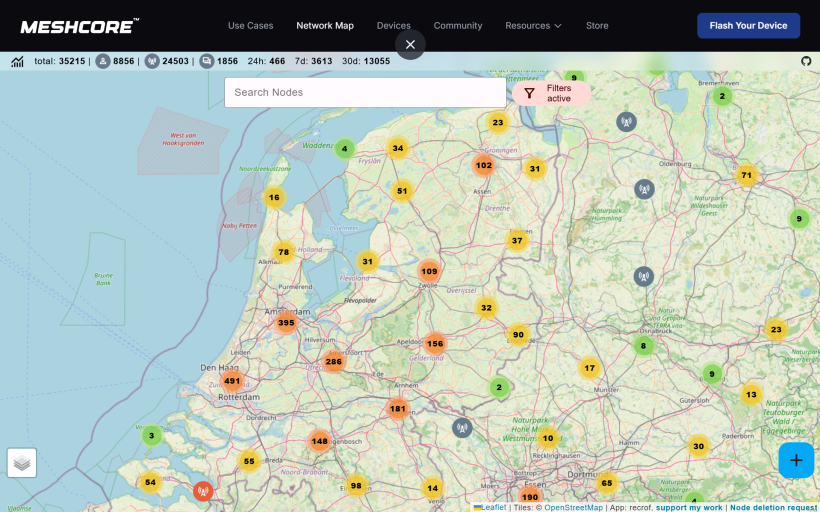
My goal is to extend the MeshCore network in the Netherlands and especially create coverage in my area (Den Ham, Overijssel). Below shows the map of the number of repeaters at the time of writing (April 2026). As you can see, the number of repeaters in Overijssel is relatively low.
For a complete self-sufficient system, the logical choice is to make the repeater solar-powered. This way, it can be completely independent in emergency situations and when power grids are offline.
On AliExpress you can find a small solar panel (4W) (including a solar power manager to charge up to 6x 18650 batteries) for around €20. It is described as IP66, so it should survive a good rain shower, although with AliExpress products you can never be entirely sure. Combined with a microcontroller and LoRa radio, this makes for a budget MeshCore repeater.
Hardware
The following components are used for this repeater build:
- 4W solar panel
- Heltec V3 (ESP32) Board
- 5 dBi Omni directional antenna (Indoor)
- JST PH 1.25mm Male/Female pins
- 1x-6x 18650 batteries (I am currently using 2 with a total capacity of 3200 mAh)
- Electrical junction box
- 3.5mm jack female adapter
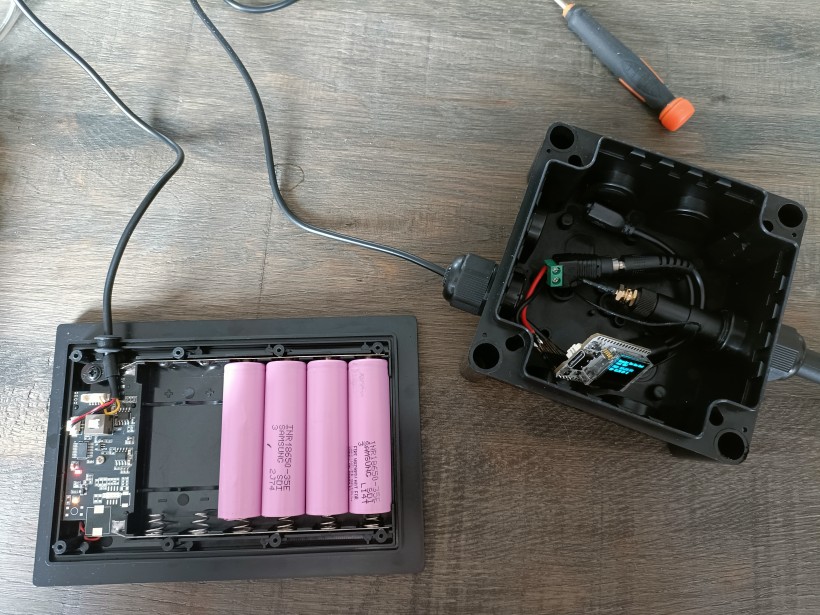
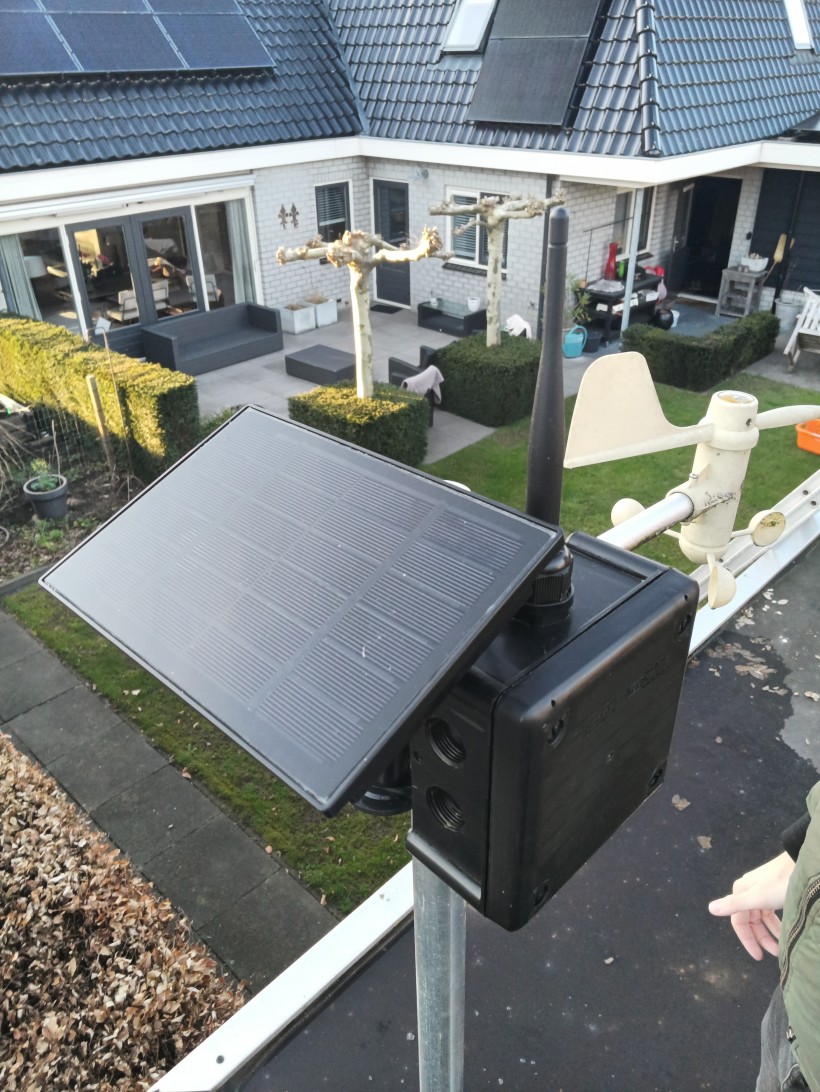
I built my MeshCore radio and antenna into a cable junction box. I'm using an indoor antenna, so the main challenge was keeping the antenna connector out of reach of moisture. The antenna just barely fit through the M20 cable gland, and I was able to tighten it a bit more so the rubber sits snugly around the antenna. Fingers crossed it's sufficiently waterproof.
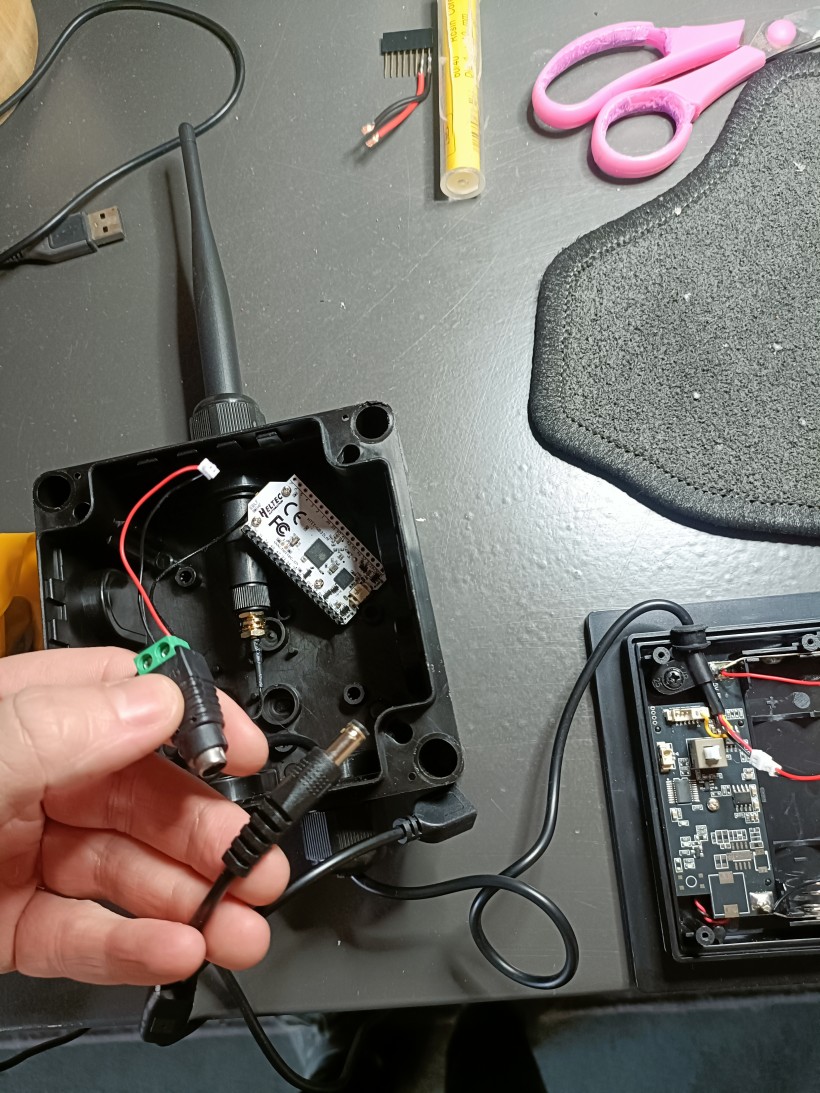
At first, I was using the 5V output of the solar panel via the USB-C cable to power the Heltec V3. But this had 2 downsides:
- The output was controlled by the solar panel: when the battery capacity reached below 10%, the 5V output would turn off and only be turned on again when the capacity was charged again to 90%.
- We could not measure the battery level.
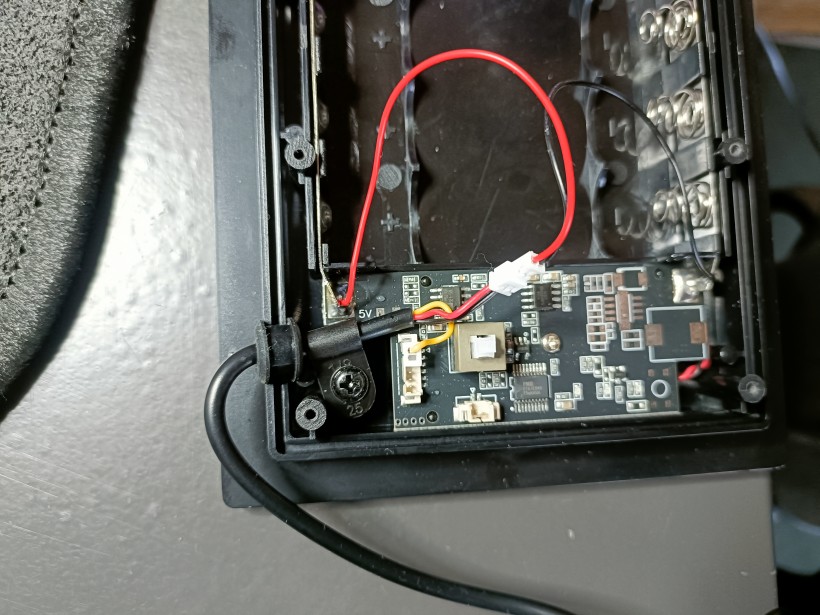
As a solution, I disconnected the JST connector of the output cable from the 5V output of the solar panel and directly soldered a JST 1.25mm cable to the batteries, which I could connect to the JST pin from the output cable. The batteries are still being charged by the solar panel, but we directly power the Heltec V3 from the batteries, and not from the power manager of the solar panel.
The black output cable of the solar panels is directly connected to the batteries. So there is no 5V over this line, even though the output cable end has a USB connector!. Expect 3V - 4.2V depending on the battery level.
Firmware
You can either install the default firmware or custom firmware via https://meshcore.co.uk/flasher.html
I use a Heltec V3 with custom low power firmware. Make sure to enable the powersaving mode using the CLI:
powersaving onYou need another companion meshcore radio to be able to send commands to the repeater radio.
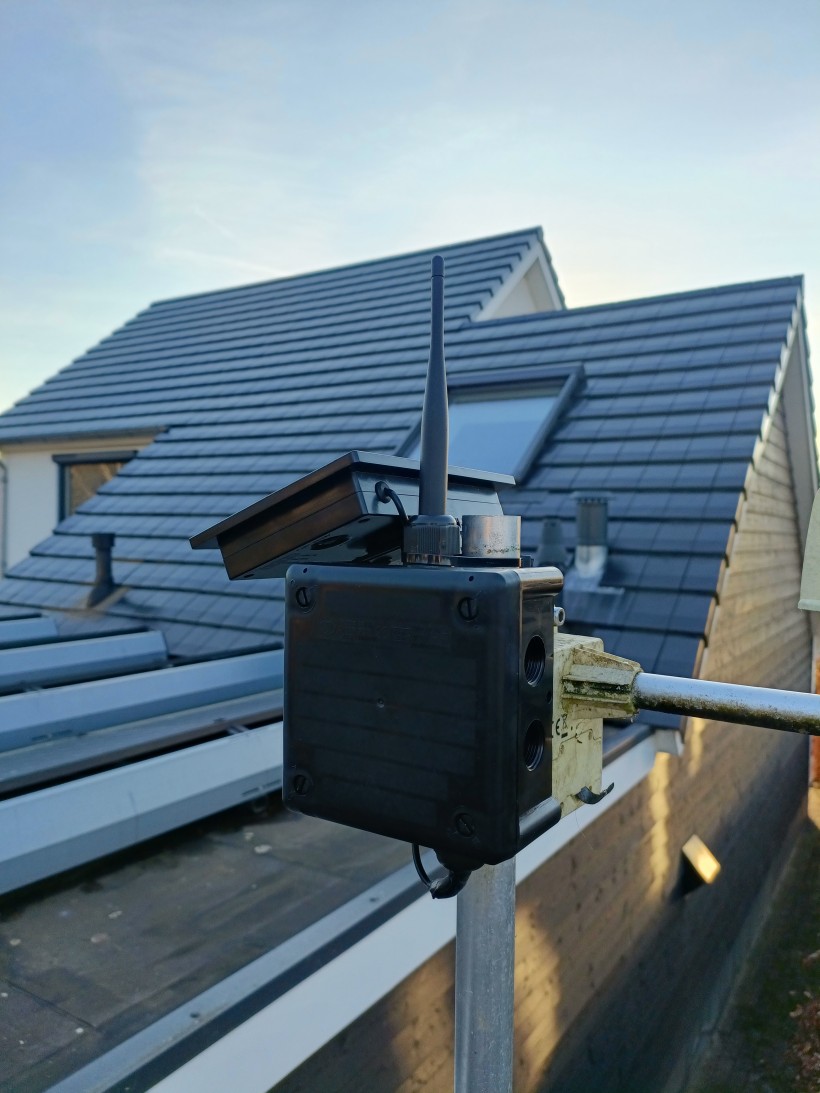
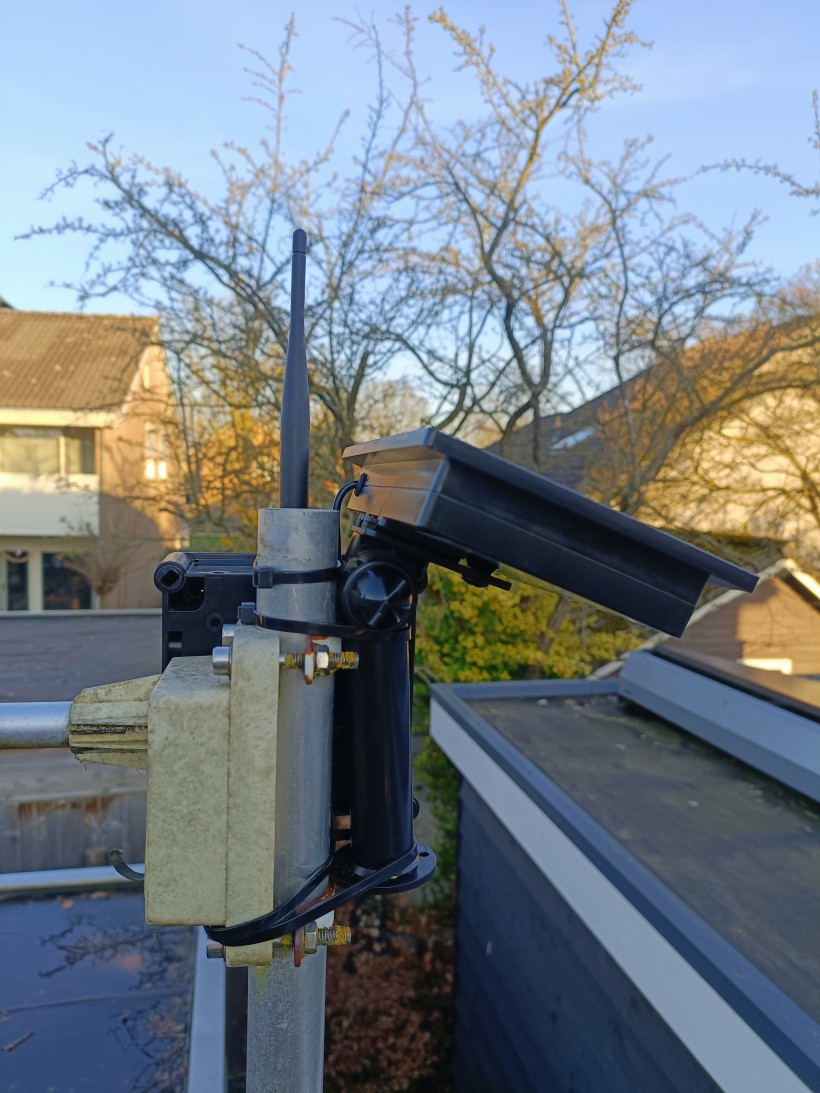
For now I've hung it as a test on the mast of an existing weather station. If it runs well for a while, it may go a few meters higher on the roof of the house. So far the battery has often been around 80-90% when I checked during the day — though this isn't a very active area compared to central and western Netherlands. I'm now tracking the battery level of my repeater every 30 minutes via Home Assistant.
https://meshcore.co.uk/map.html